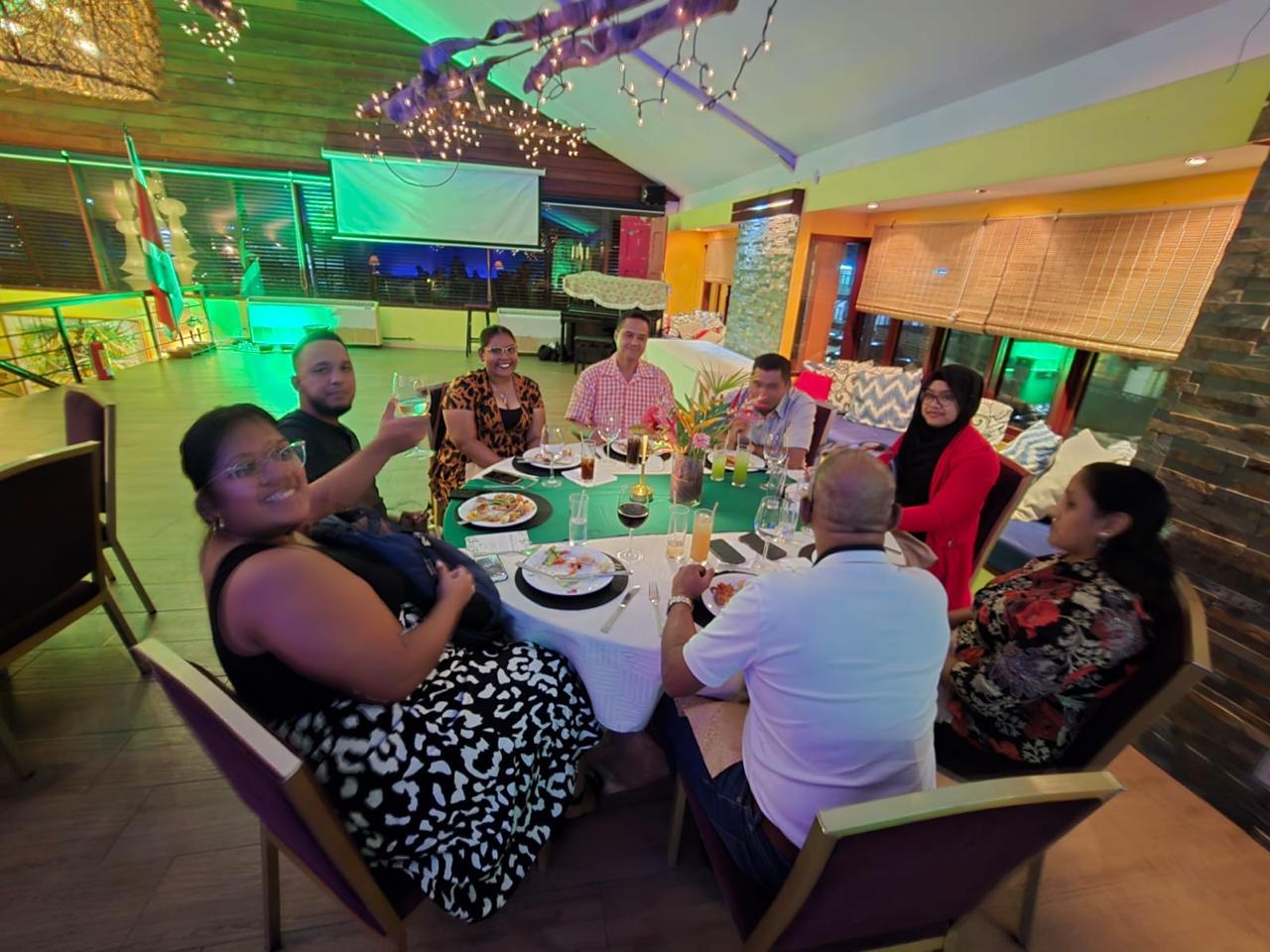
Game Warden Capacity building training
Game Warden Capacity building training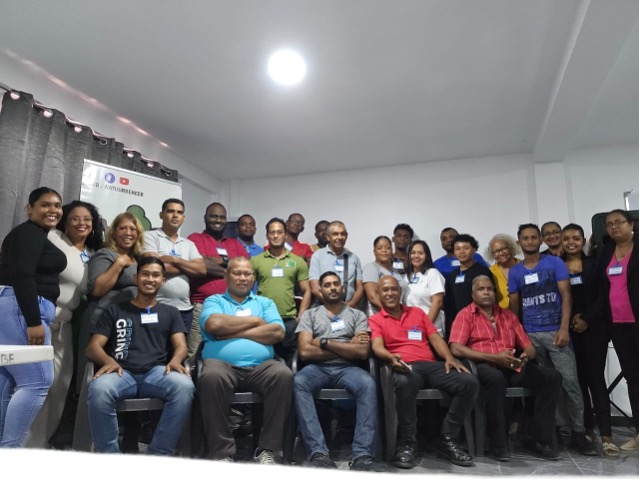
Nederlands:
Jachtopzieners zijn verantwoordelijk voor het toezicht houden op de jachtpraktijken in Suriname en zorgen ervoor dat de wetgeving rondom de bescherming van flora, fauna en beschermde gebieden wordt nageleefd. Zijspelen daarom ook een cruciale rol in het beschermen van de biodiversiteit van Suriname.
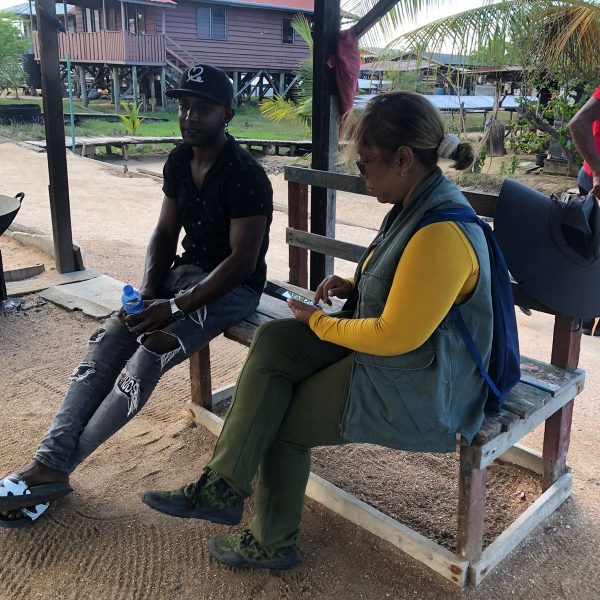
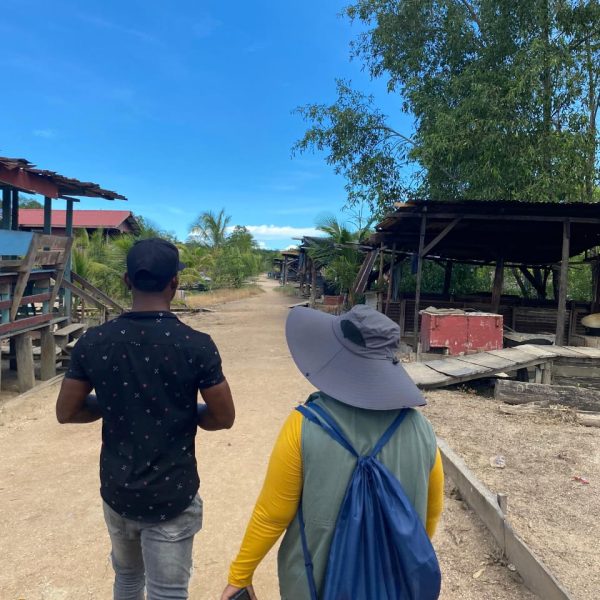
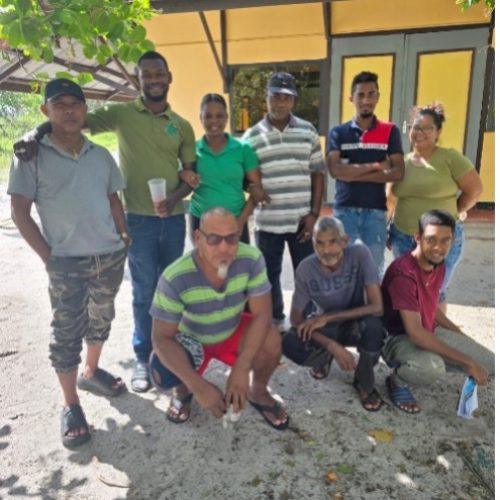
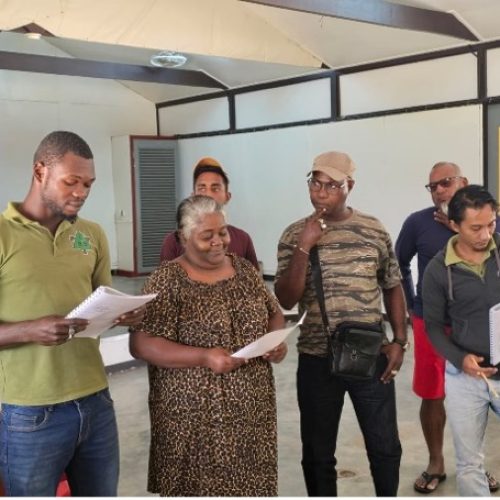
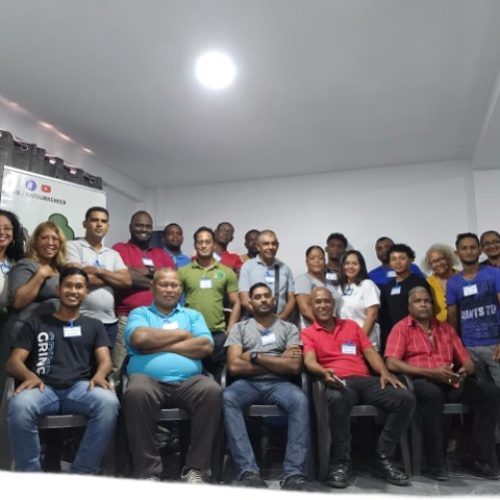
Om de capaciteit van de jachtopzieners te versterken, is er een speciaal trainingsprogramma ontwikkeld. Het doel van dit programma is de effectiviteit en integriteit van de jachtopzieners te vergroten, zodat ze hun beheersrol in het dagelijks werk beter kunnen vervullen. Fauna Conservation Suriname heeft dit trainingsprogramma ontwikkeld en op de volgende data verzorgd: 6-8 december 2024, 13-15 december 2024, 22-24 januari 2025 en 30 januari-1 februari 2025. In totaal werden 60medewerkers van de afdeling Beheer getraind. Dit programma werd mogelijk gemaakt dankzij de steun van hun financiële partner, New Jersey Audubon. Het trainingsprogramma bestond uit drie (3) onderdelen, waaronder Sociaal Milieu, Anti-Corruptie en Community Engagement & Communication.
Sociaal Milieu is het onderdeel van het trainingsprogramma waar sociale interacties werden behandeld. Dit onderdeel benadrukt de relatie tussen mens en natuur, een essentieel aspect voor effectief en duurzaam natuurbeheer. Onderwerpen als relatievaardigheden, verschillende vormen van interactie, sociaalecologische interacties en ecologische interacties werden behandeld. Ook werd er tijdens de training gesproken over Responsive Governance, waarbij onderwerpen zoals verantwoord besluitvorming, stakeholderanalyse, social-ecological systems en de toepassing van sociale criteria in verschillende scenario’s aan bod kwamen. Dit onderdeel is van bijzonder belang voor de jachtopzieners, aangezien zij opereren binnen gemeenschappen en regelmatig te maken hebben met culturele tradities en sociale dynamieken die invloed kunnen hebben op het gebruik van natuurlijke hulpbronnen.
Anti-Corruptie is een ander essentieel onderdeel van het trainingsprogramma. Dit onderdeel richt zich op het begrijpen van anti-corruptieconcepten en hoe deze ingezet kunnen worden om illegale wild handel te bestrijden, aangezien corruptie vaak de basis vormt van deze illegale praktijken. In dit onderdeel worden de kenmerken van corruptie besproken, evenals de verschillende situaties waarin corruptie voorkomt bij de illegale handel in wild. Er wordt ook ingegaan op strategieën om deze corruptie te bestrijden, met een nadruk op de betrokkenheid van lokale gemeenschappen als cruciale partners in de aanpak van het probleem. Als afsluiting van dit onderdeel wordt er aandacht besteed aan de instrumenten die ingezet kunnen worden ter bestrijding van zowel corruptie als de illegale handel in wild.
Het laatste onderdeel, Community Engagement & Communication, benadrukt dat sterke lokale gemeenschappen de basis vormen voor een bloeiende samenleving. In dit onderdeel wordt het belang van effectieve communicatie, community engagement en de dynamiek binnen gemeenschappen behandeld. Het toont aan hoe cruciaal het is om met lokale gemeenschappen samen te werken en hen actief te betrekken bij natuurbeheer en bescherming van het milieu.
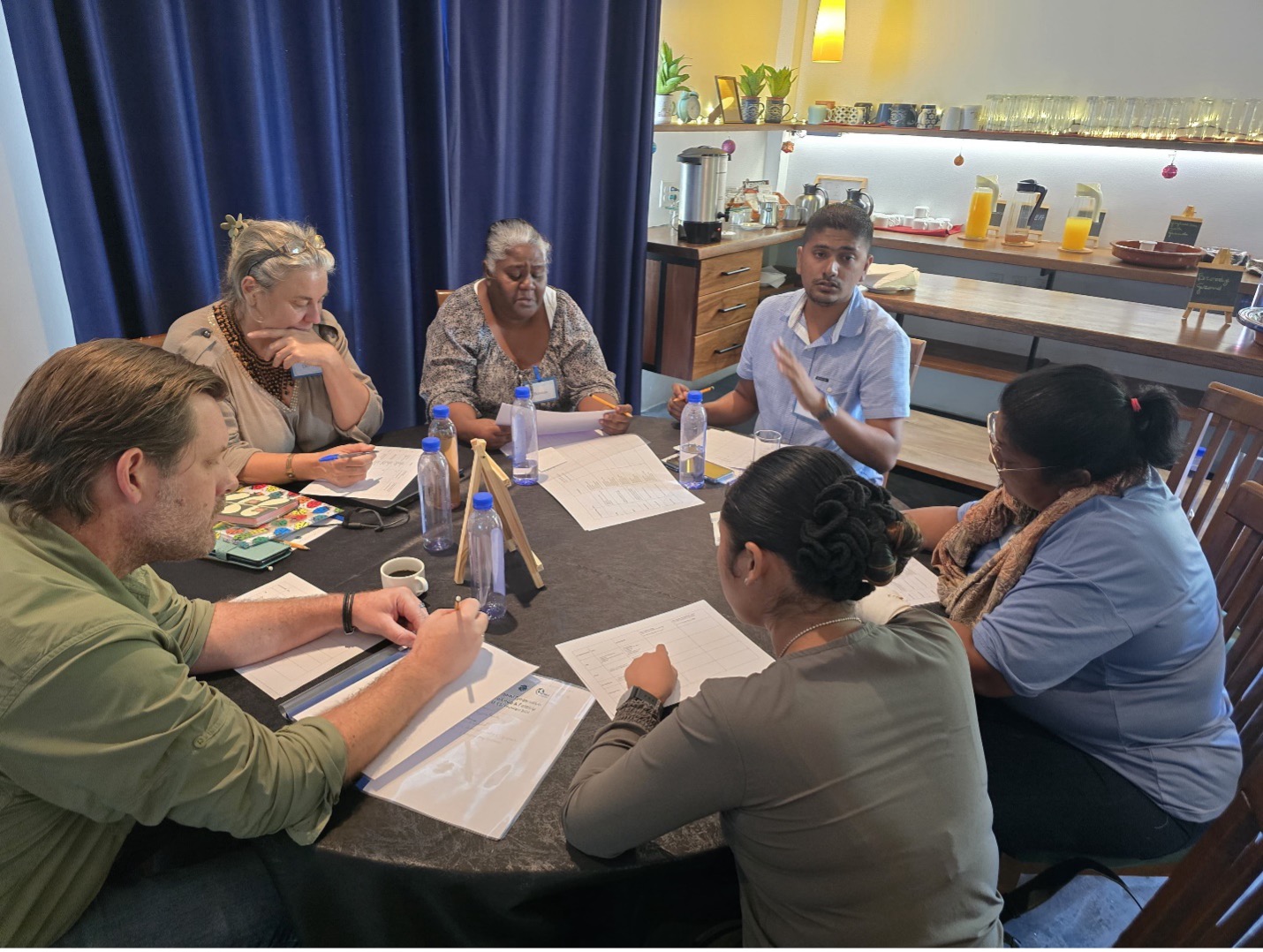
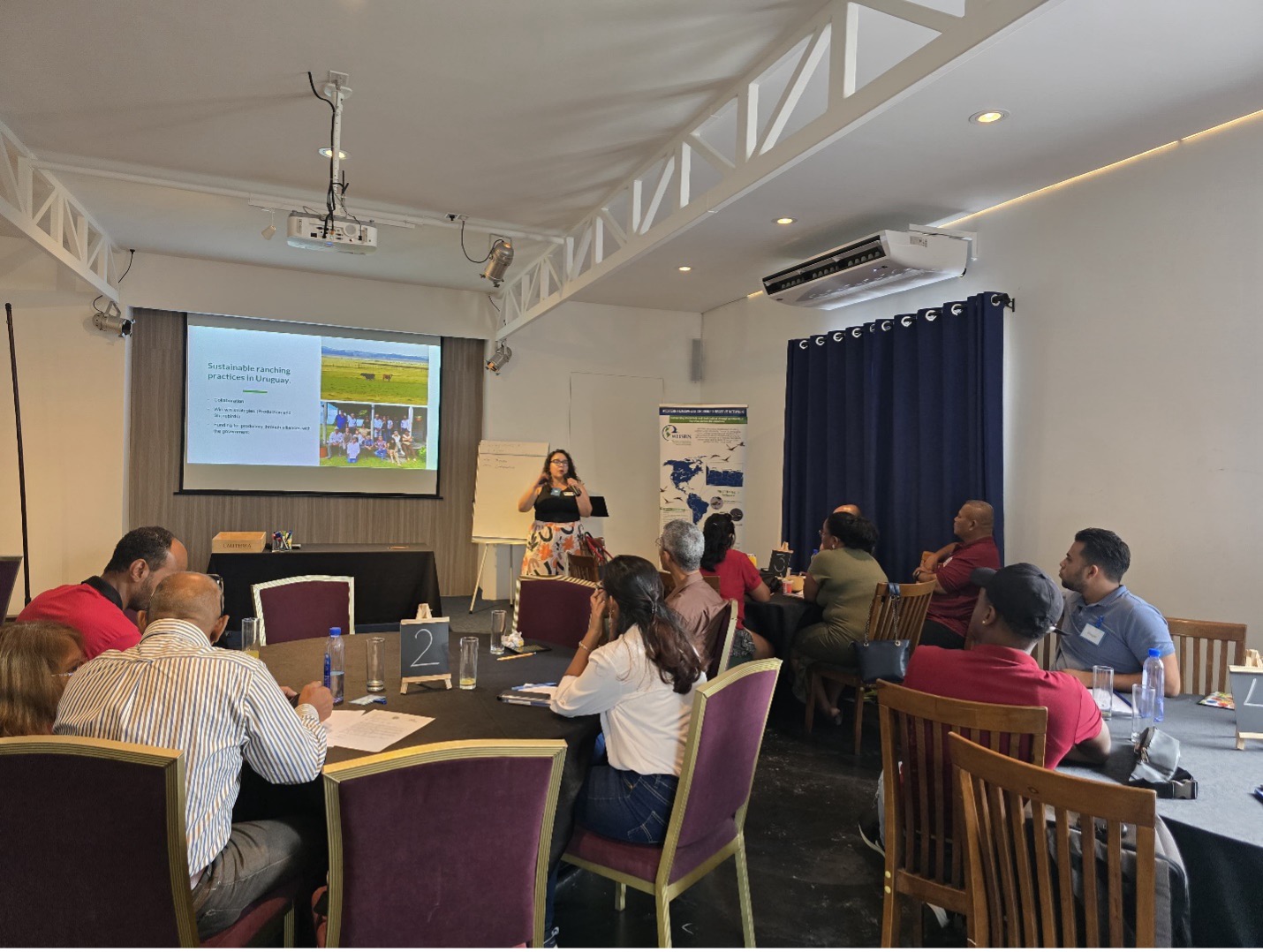
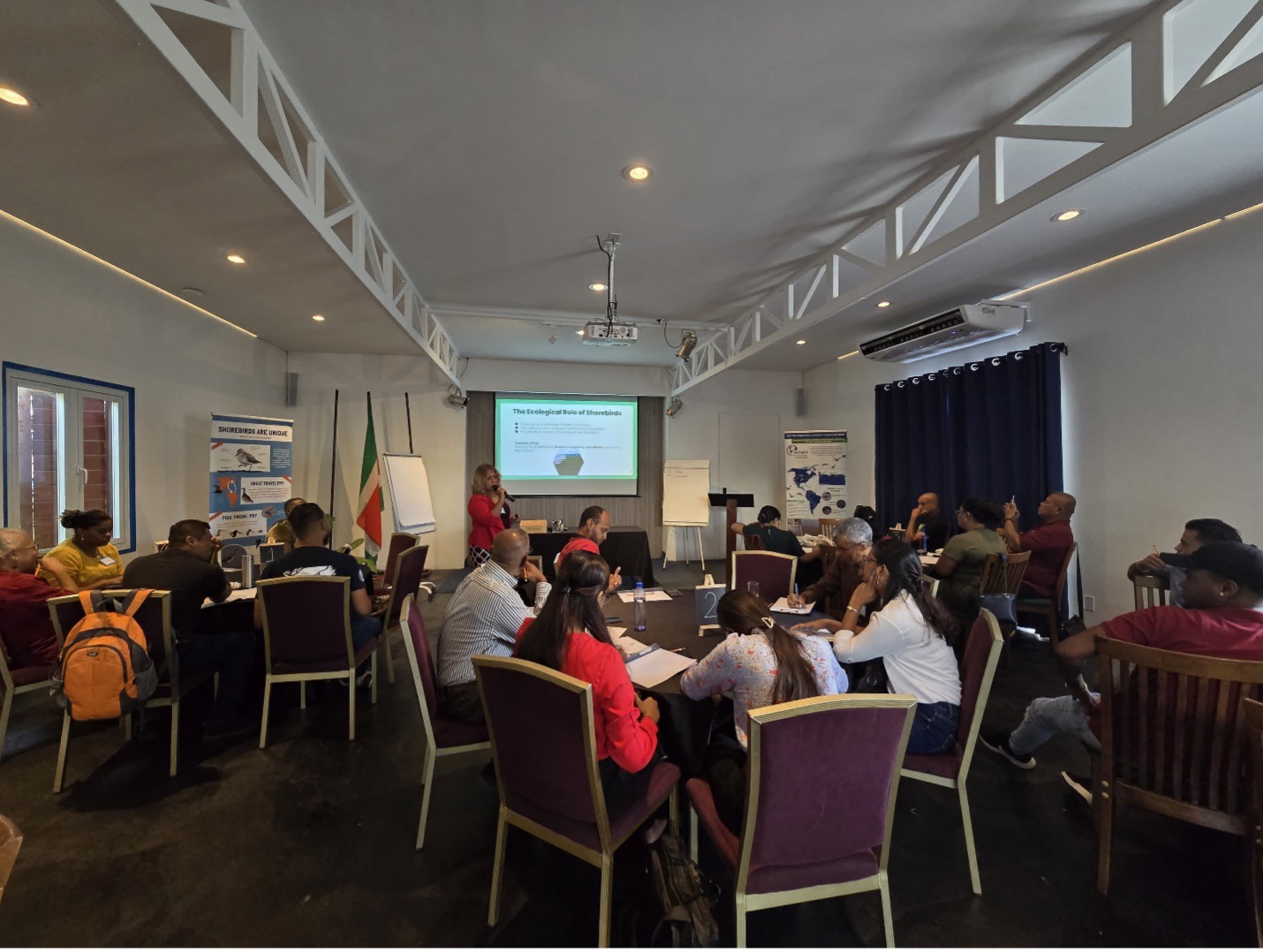
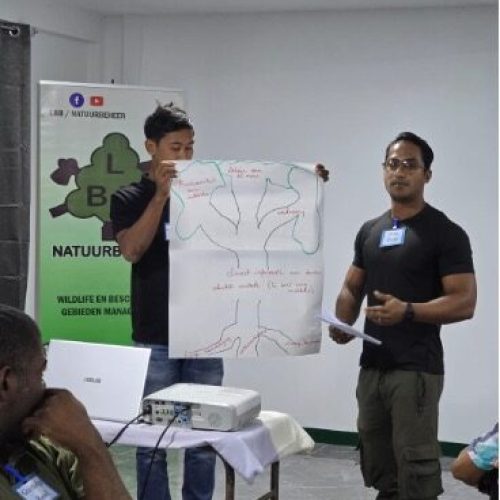
Dit trainingsprogramma werd ontwikkeld door Sonja Carilho, Msc., en Marijem Djosetro, Ph.D., met de assistentie van milieuwetenschappen student Sha’iera Moennoe. Samen verzorgden zij de interactieve trainingen, waarbij ze de deelnemers actief betrokken door middel van ice breakers, discussie-momenten, groepsopdrachten en oefeningen. Dit werd gedaan om ervoor te zorgen dat de deelnemers niet alleen hun kennis over de drie onderwerpen vergrootten, maar ook hun eigen ervaringen konden delen in een open en ondersteunende sfeer.
Als gevolg van dit trainingsprogramma wordt een rapport geschreven en gepresenteerd aan de leiding van de jachtopzieners om hun bewustzijn van het sociaal milieu van de jachtopzieners, hun werkomstandigheden en communicatie met de jachtopzieners te vergroten.
Geschreven door: Pascali Vreedzaam
Engels:
Game wardens oversee hunting practices in Suriname and ensure that legislation regarding the protection of flora, fauna, and protected areas is adhered to. They play a crucial role in protecting the biodiversity of Suriname.
A special training program has been developed to enhance the game wardens’ capacity. The goal of this program is to increase the effectiveness and integrity of the game wardens, allowing them to better fulfill their management role in daily operations. Fauna Conservation Suriname developed and organized this training program on the following dates: December 6-8, 2024, December 13-15, 2024, January 22-24, 2025, and January 30-February 1, 2025. A total of 60 staff members from the Management Department were trained. This program was made possible thanks to the support of their financial partner, New Jersey Audubon. The training program consisted of three (3) parts, including Social Environment, Anti-Corruption, and Community Engagement & Communication.
Social Environment is the section of the training program that deals with social interactions. This part emphasizes the relationship between humans and nature, which is a critical aspect of effective and sustainable nature management. Topics such as relationship skills, various forms of interaction, socio-ecological interactions, and ecological interactions were covered. The training also addressed Responsive Governance, including topics such as responsible decision-making, stakeholder analysis, social-ecological systems, and the application of social criteria in various scenarios. This section is particularly relevant for game wardens, as they operate within communities and often deal with cultural traditions and social dynamics that can impact the use of natural resources.
Anti-corruption is another essential component of the training program. This section focuses on understanding anti-corruption concepts and how they can be used to combat illegal wildlife trade, as corruption often forms the basis of such illegal practices. This part discusses the characteristics of corruption and the various situations in which corruption occurs in the illegal wildlife trade. It also explores strategies to combat corruption, with a focus on the involvement of local communities as crucial partners in addressing the issue. At the end of this section, attention is given to the tools that can be used to combat both corruption and illegal wildlife trade.
The final section, Community Engagement & Communication, highlights the importance of strong local communities as the foundation of a thriving society. This part covers the significance of effective communication, community engagement, and dynamics within communities. It demonstrates how crucial it is to collaborate with local communities and actively involve them in nature management and environmental protection.
This training program was developed by Sonja Carilho, M.Sc., and Marijem Djosetro, Ph.D., with the assistance of environmental science student Sha’iera Moennoe. Together, they delivered interactive training sessions, engaging the participants through icebreakers, discussion moments, group assignments, and exercises. This approach ensured that participants not only expanded their knowledge on the three topics but also had the opportunity to share their own experiences in an open and supportive atmosphere.
As a result of this training program, a report is written and presented to the leadership of the game wardens to raise awareness of the social environment of the game wardens, their working conditions, and their communication with the game wardens.
Written by: Pascali Vreedzaam
Nickerie Birds Festival 2024
Migratory Bird Festival 2024
Nederlands:
Wist u dat migrerende steltlopers elk jaar duizenden kilometers afleggen en onderweg talloze gevaren tegenkomen? Het is de moeite waard om inspanningen te leveren voor het voortbestaan van deze veerkrachtijge wezens.
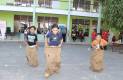
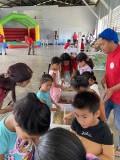
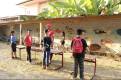
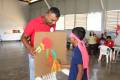
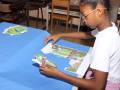
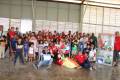
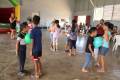
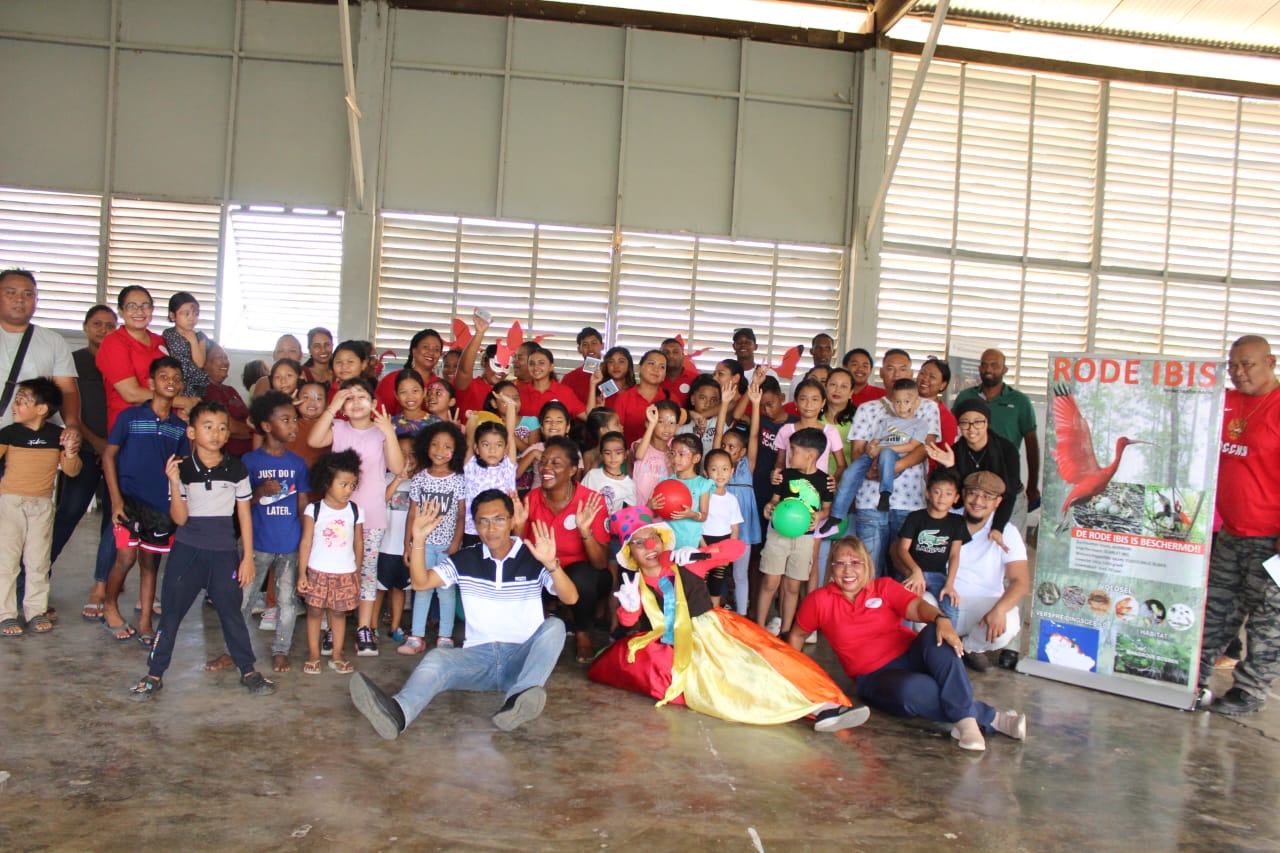
Het Trekvogelfestival is twee jaar achter elkaar gehouden in Nickerie en keerde terug in oktober 2024 om jongeren te inspireren voor het beschermen van deze ongelooflijke reizigers. Met het thema “Protect Insects, Protect Birds” werd het festival twee dagen lang gehouden voor basisschoolleerlingen om bewustzijn te creëren over het belang van migrerende steltlopers en hun leefgebieden in Suriname. Door middel van interactieve spelletjes, sport activiteiten en verhalen ontdekten leerlingen de cruciale rol die deze vogels spelen in onze ecosystemen, de uitdagingen waar ze voor staan en hoe ze kunnen bijdragen aan hun bescherming.
Door het creëren van deze festivals waar jongeren op een makkelijke, leuke en educatieve manier meer kunnen leren over onze wildleven, bouwen we aan een generatie die de natuur waardeert en beschermt.
English:
Did you know that migratory birds travel thousands of kilometers every year and encounter countless dangers along the way? It is worth spending efforts for the survival of these resilient creatures.
The Migratory Bird Festival has been held in Nickerie for two consecutive years and returned in October 2024 to inspire the younger generation to protect these incredible travelers. With the theme “Protect Insects, Protect Birds”, the festival was held for two days for primary school students to create awareness about the importance of migratory birds and their habitats in Suriname. Through creative games, hands-on activities, and engaging lessons, students discovered the crucial role these birds play in our ecosystems, the challenges they face, and how they can contribute to their protection.
By creating these festivals where young people can learn more about our wildlife in an easy, fun, and educational way, we are building a generation that values and protects nature.
This festival was possible thanks to the St. Clara School, the teachers from five primary schools in Nieuw Nickerie, Solom Women Movement and our sponsors: